XR validation accessory
Hardware for research studies and partner demonstrations, with illumination that can be switched on and off.
Peripheral illumination for XR
The dark border inside an XR headset can make the virtual world feel like a view through a scuba mask. Sigrist XR is developing a patented optical layer that lights your nose and nearby skin to match the scene. We are testing whether this makes the border less noticeable.
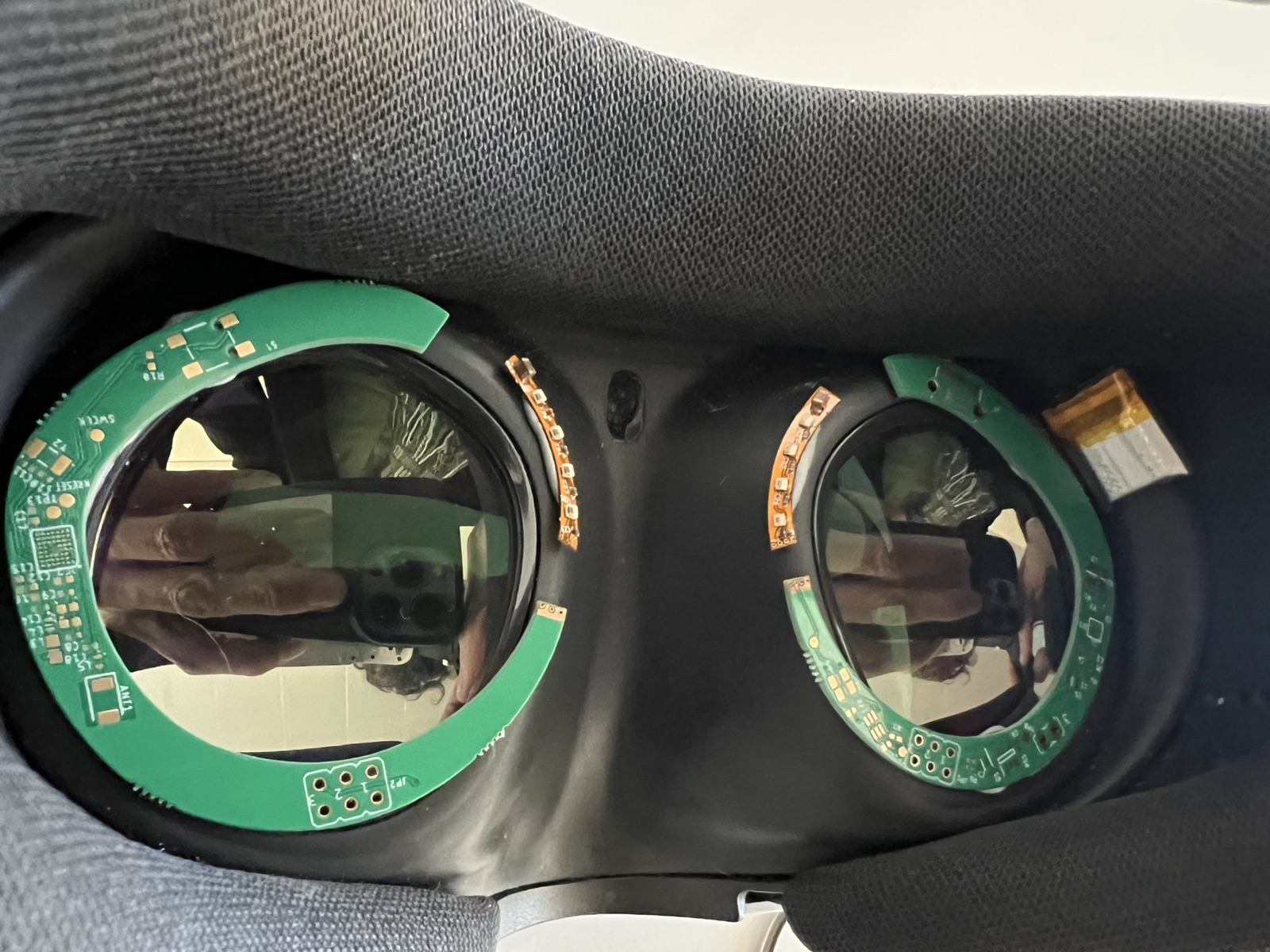 Working MVP · 2026
Validation in progress
MVP validation project with OST University, Switzerland
Working prototype
Scene-matched illumination inside an XR headset
The problem
Inside a headset, bright imagery stops at a dark border. That border can remain noticeable even when the virtual scene looks convincing.
The optics limit how much of the virtual world you can see. The dark interior adds a sharp change in brightness at the display’s edge, while the wearer’s nose and brows remain unlit. These nearby facial surfaces are where Sigrist XR adds light.
What the illumination adds
Can this reflected light reduce the scuba-mask effect without changing the displayed image?
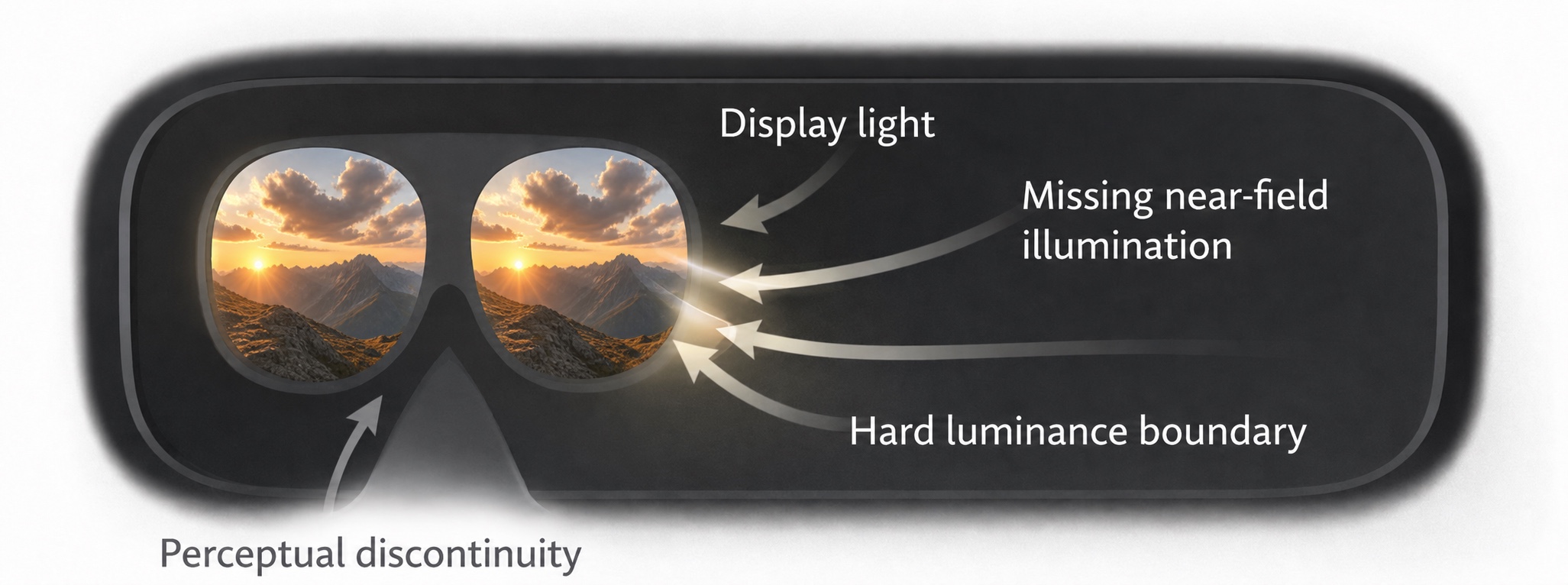
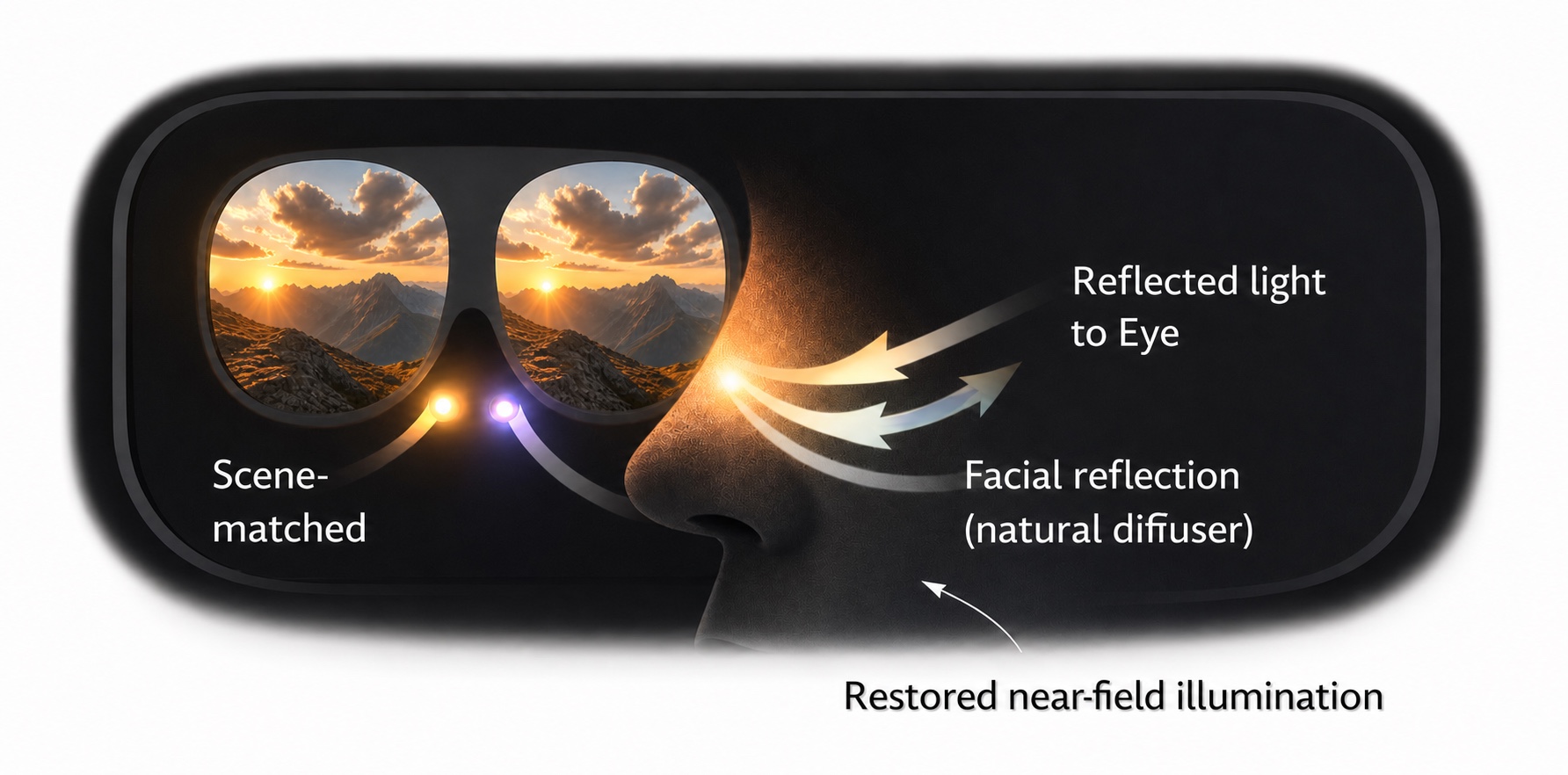
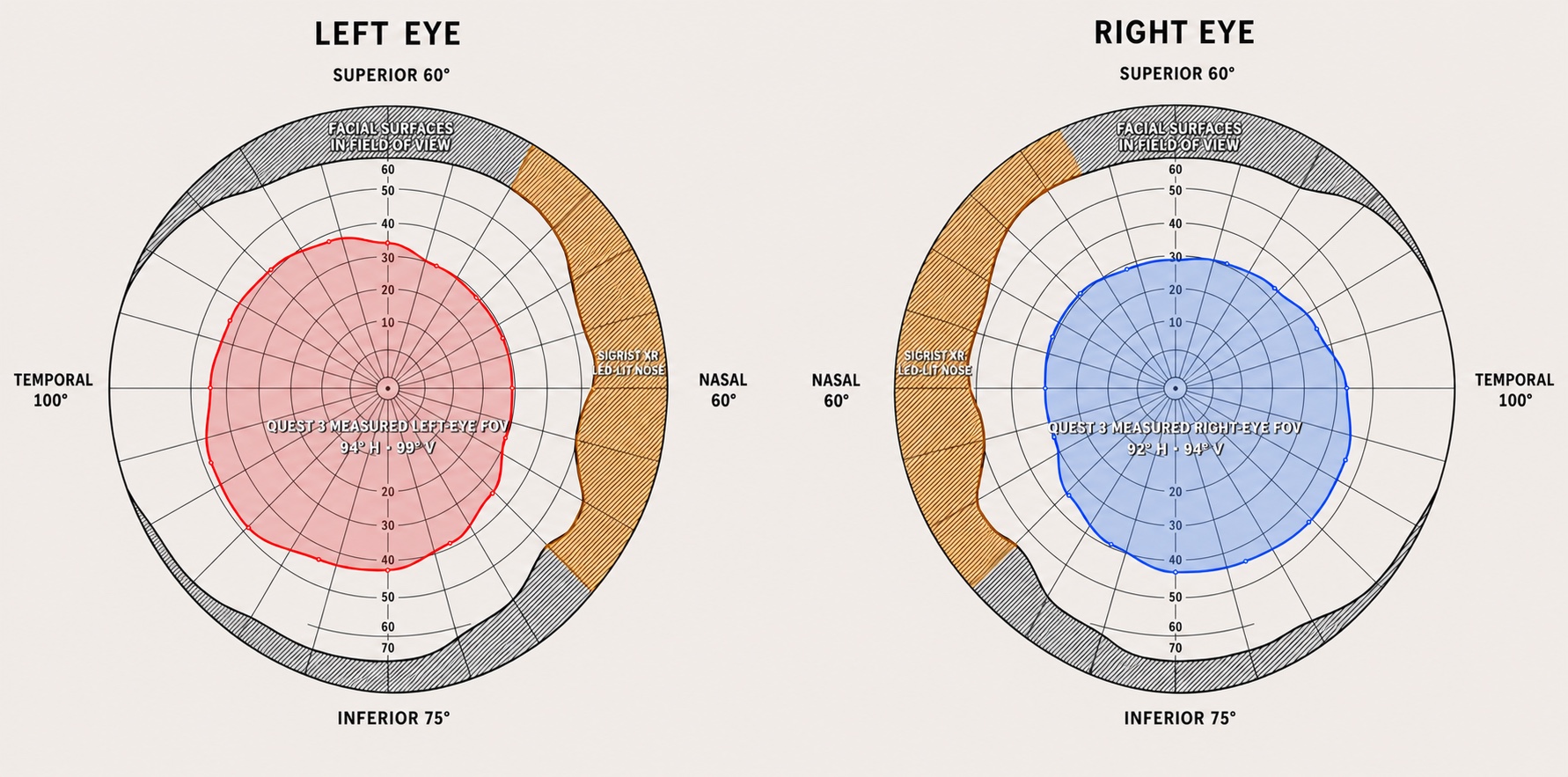
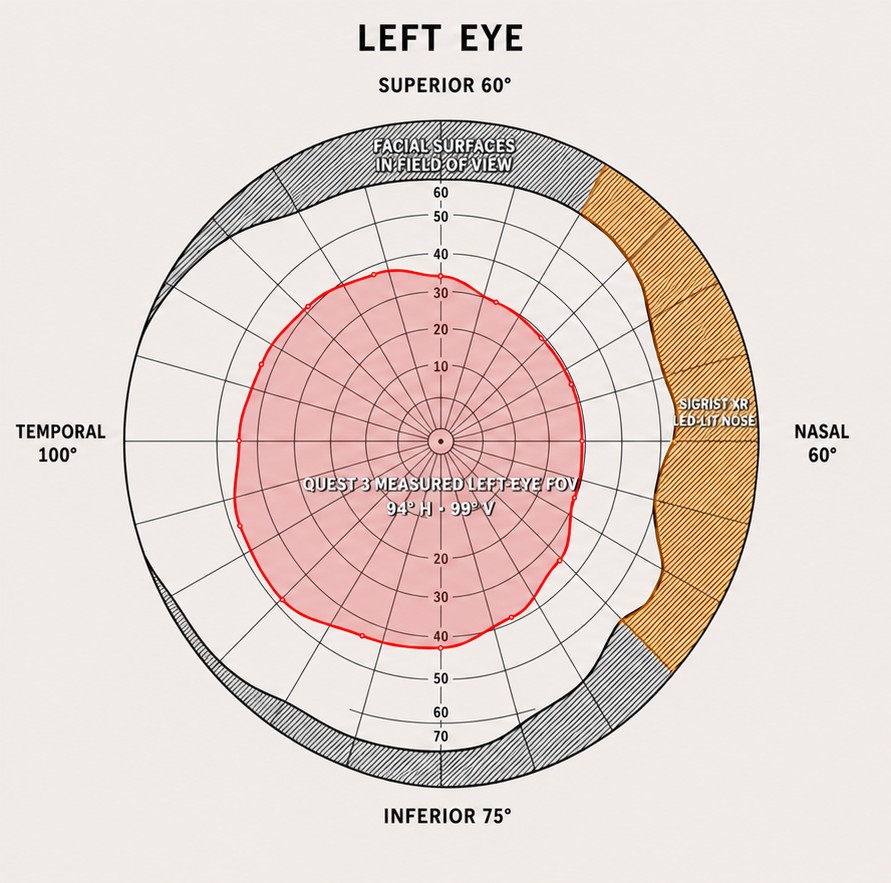
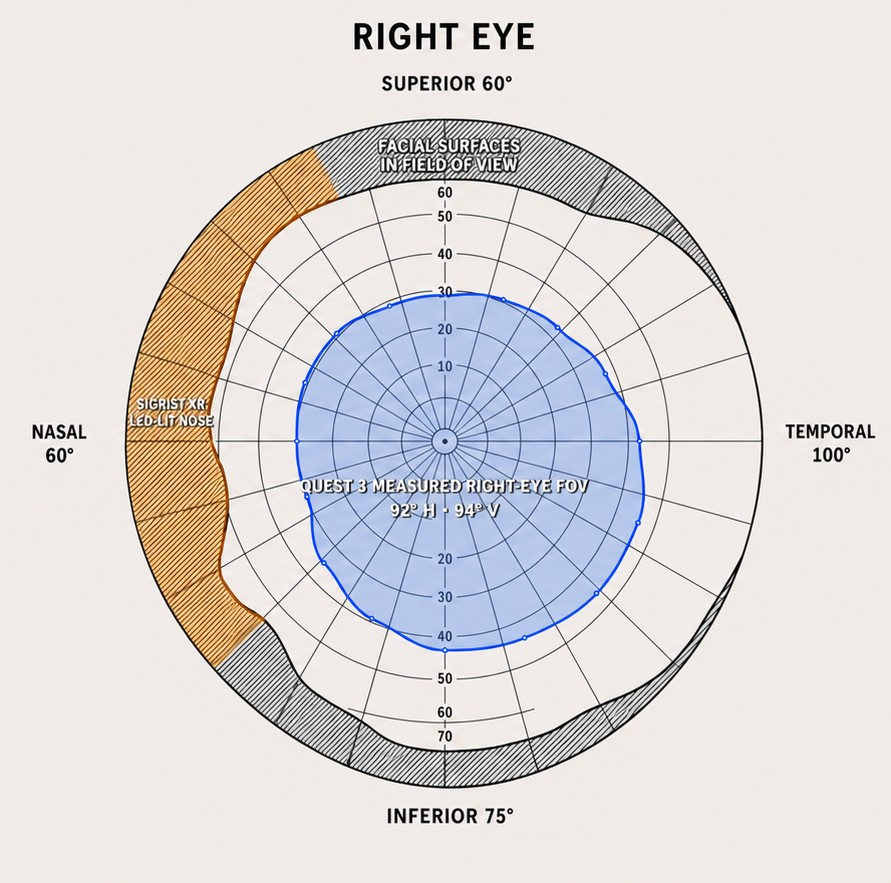
The red and blue areas show the measured Quest 3 display fields. Grey hatching marks facial surfaces in view; orange marks the nose region lit by Sigrist XR. Illumination adds light around the image. The display’s actual field of view stays unchanged.
The technology
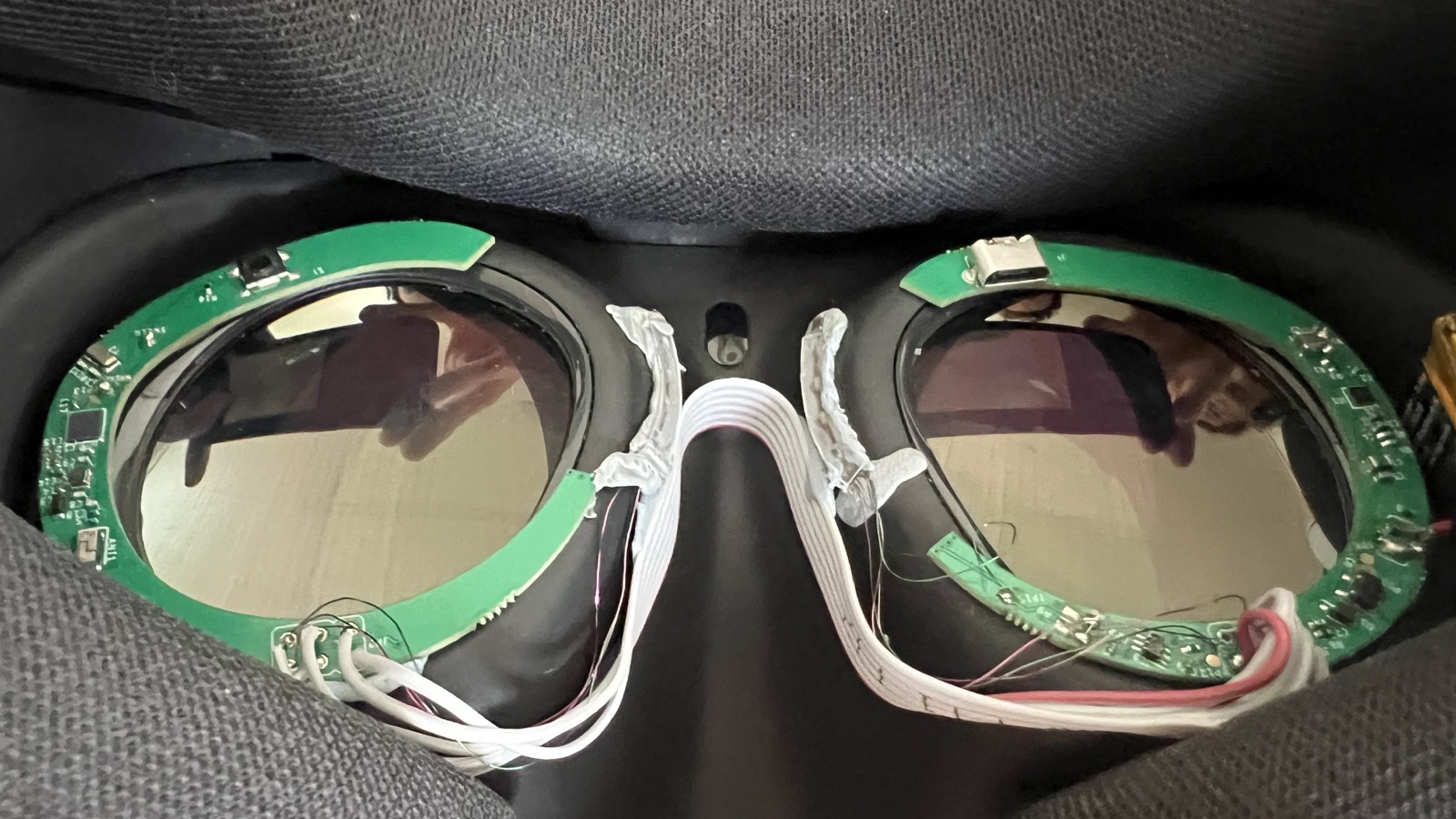
A compact optical layer directs light toward the nose and nearby skin. The skin acts as a natural diffuser: it scatters the light into peripheral vision. The light changes with the virtual scene and stays on the wearer’s own facial surfaces as they move their head.
On-device screen capture samples the virtual scene’s light and colour 30 times per second.
The emitters adjust their output to match the sampled light and colour, directing it toward the nose and adjacent skin.
Light reflected from the skin reaches peripheral vision beside the displayed scene. The virtual image itself stays unchanged.
The prototype
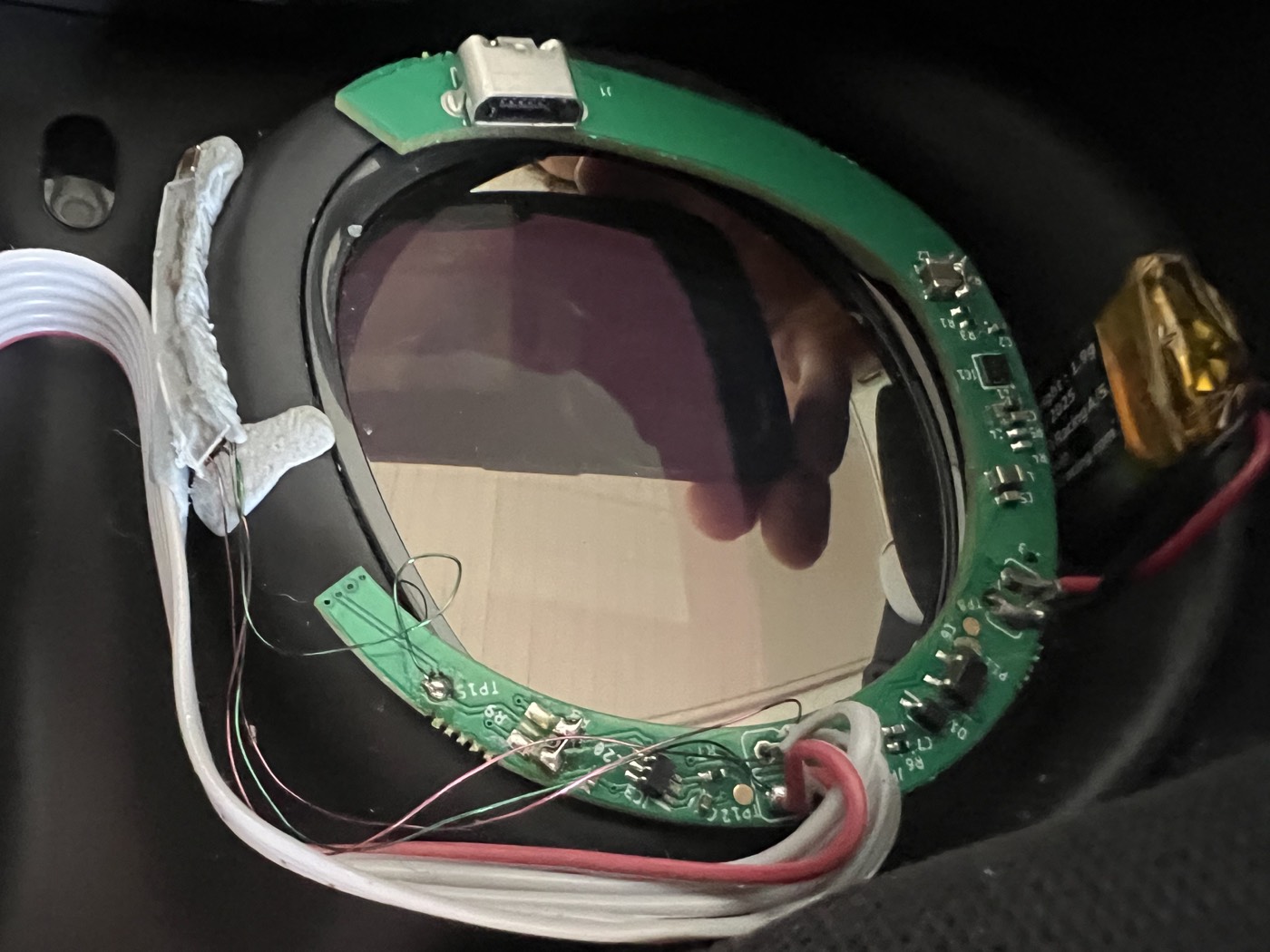
The prototype lets researchers compare the same headset and scene with illumination switched on and off. Participants can report how noticeable the border is and how enclosed the view feels.
Built
Working emitters and control electronics fitted around existing headset optics.
To validate
Whether illumination reduces the scuba-mask effect, how it affects comfort and distraction, and whether it meets optical safety requirements.
Business model
Sigrist XR plans to license the optical layer and develop headset integrations with manufacturers. The prototype gives prospective partners a way to test the illumination before committing to an integration. Study results will determine the requirements for that work.
Hardware for research studies and partner demonstrations, with illumination that can be switched on and off.
Licensing and co-development of the optics, mounting and control electronics for a manufacturer’s headset.
Roadmap
Evaluate optical safety and compare participants’ responses with illumination on and off. Measure the perceived border, comfort and distraction.
Specify light output, emitter placement, mounting and control requirements using the study findings.
Build the layer into a partner headset and repeat the comparison to check its effect in that design.
Founder & contact
Contact Valentin to discuss a perception study, optical evaluation or headset integration.
Valentin studied entrepreneurship and founded Sigrist Glacé GmbH in 2020, which he continues to run. Sigrist XR is his second company. He develops the illumination concept and prototype, handles the patent work and coordinates discussions with potential research and manufacturing partners.